

WATER CONSERVATION
Where does our drinking water come from?
While some groundwater and surface water is used, most of our water in the Denver Metro comes from mountain snowmelt. In Colorado, approximately 80% of precipitation falls on the west side of the Continental Divide. However, most of the population (about 90%) lives east of the Continental Divide. Because of this, a large portion of our water is pumped through the mountains and stored in reservoirs to support growing populations in the Front Range.
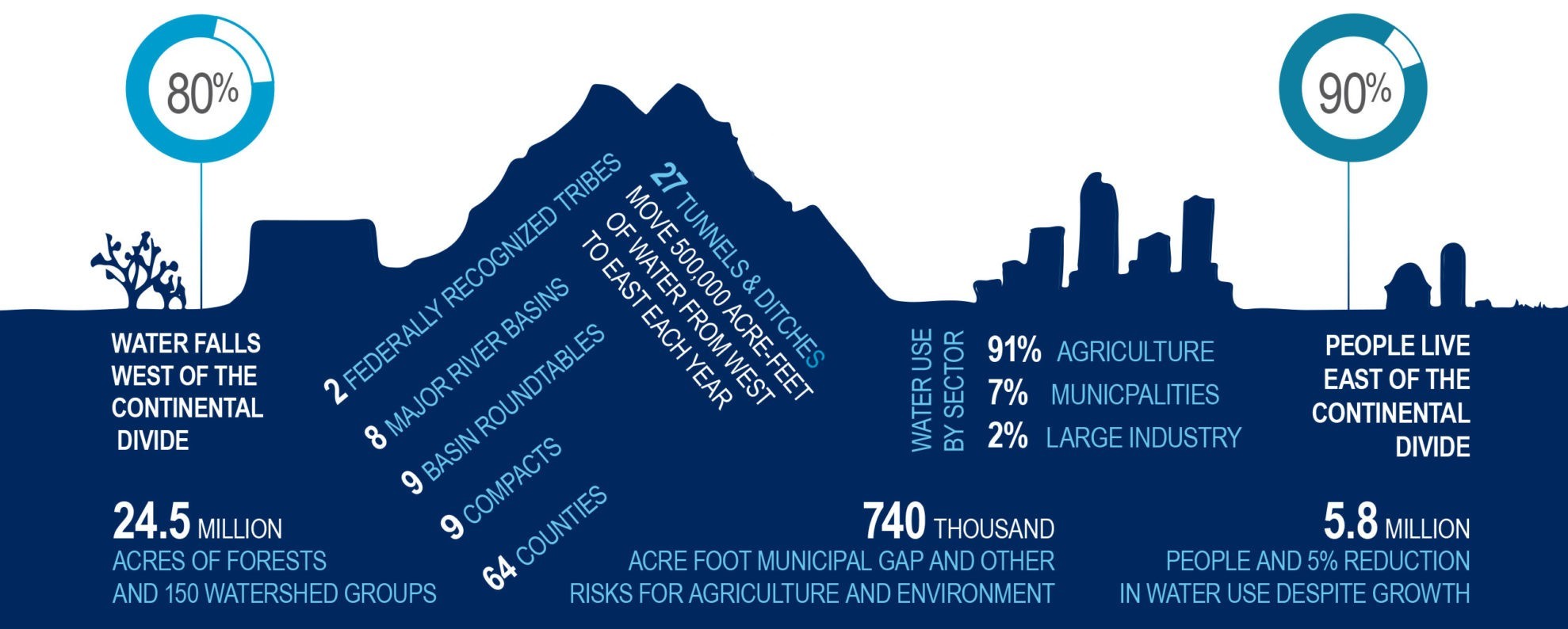 Image source: Colorado Water Conservation Board
Colorado’s climate can vary drastically, and because our water supply is so strongly impacted by winter snowfall, consistent water availability is not guaranteed. As Colorado continues to get warmer and drier, water scarcity is an increasingly pressing issue. To deal with this scarcity, Groundwork Denver works with residents to conserve water and protect our ecosystem by installing rain barrels, rain gardens, and graywater irrigation systems.
In Colorado, about 40% to 50% of household tap water is used for landscaping. Capturing rainwater, reusing graywater, and replacing grass lawns with native plants are all great ways to reduce outdoor water use. More information about conserving water with these methods can be found below!
RAINWATER HARVESTING
Harvesting rainwater with rain barrels and rain gardens allows residents to keep rainwater on their properties where it can return to the soil and reduce outdoor water needs and costs. Harvesting rainwater has the additional benefit of reducing stormwater runoff, which limits the amount of pollution being washed into our waterways. Rainwater harvesting also reduces soil erosion and helps to prevent flooding.
Rain Barrels
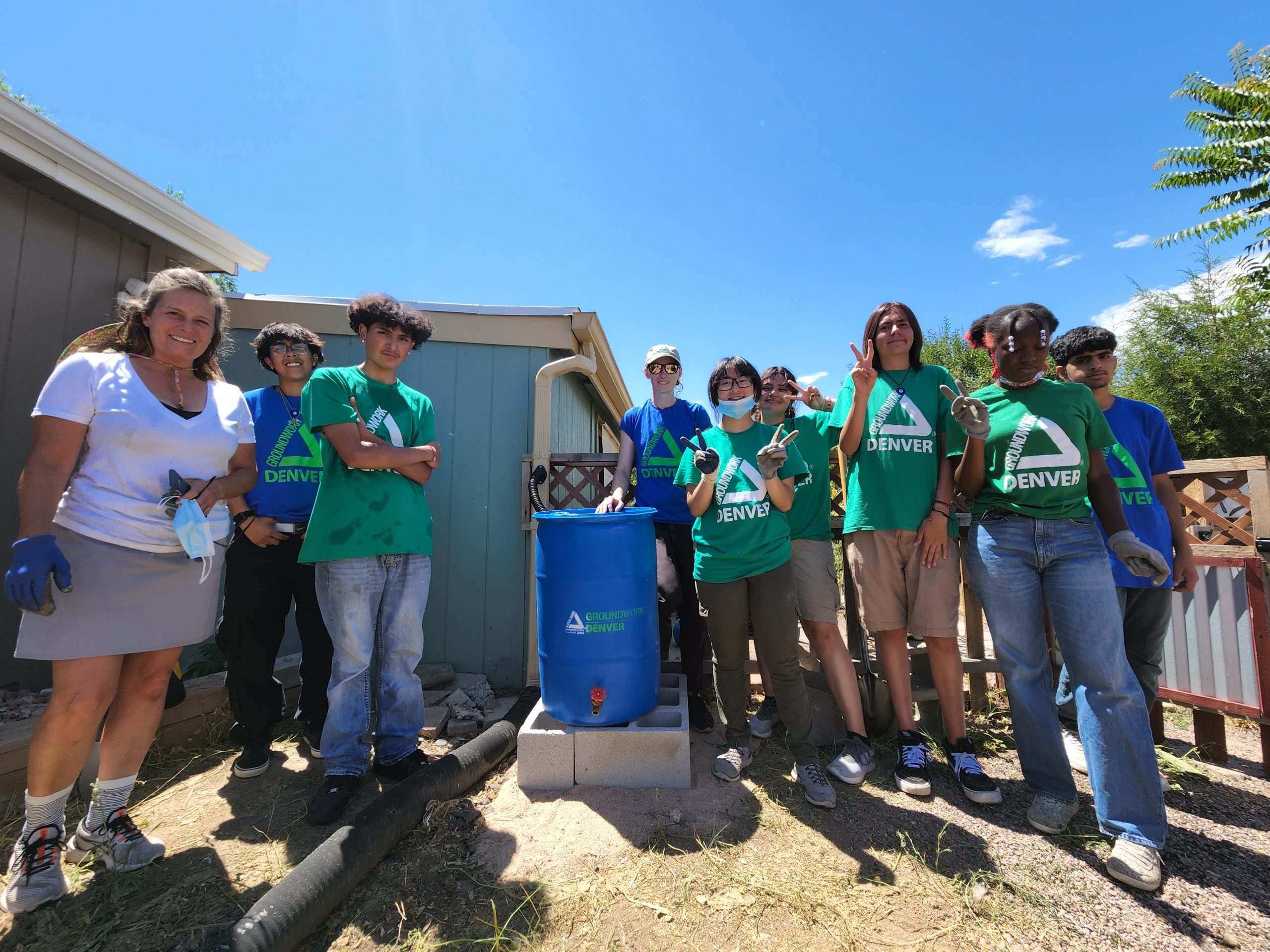
As part of our water conservation efforts, Groundwork Denver offers rain barrels at no cost to residents in areas most impacted by poor water quality and environmental injustice. The rain barrels can store up to 55 gallons of water and are sealed to limit the risk of mosquitoes or other unwanted pests. In Colorado, you are permitted to collect up to 110 gallons of rainwater at a time (equivalent to two barrels).
How Rain Barrels Work:
- The rain barrel is installed on a solid foundation of cinder blocks next to a downspout.
- The rain barrel is then connected to the downspout with a patented kit that preserves the downspout and maintains a closed system.
- During rain events, the water that falls on your roof runs into your gutters and flows through your downspout into the barrel.
- As the barrel fills up, the water can be used as needed through a spigot at the barrel's base.
- Gravity does the work for you, and you even have the option of attaching a hose.
- Enjoy a lush garden, save tap water, and help improve the health of nearby creeks and rivers!
Grant funds at Groundwork Denver cover everything needed to harvest rainwater for free! This includes the rain barrel, barrel stand, patented kit, installation, and support with long-term maintenance.
Currently, rain barrels are limited to Groundwork Denver tree program participants who have been notified by email about their eligibility.
Email water@groundworkcolorado.org for further inquiries, including requesting a rain barrel or hosting a rainwater harvesting workshop.

Rain Gardens
Rain gardens are another important tool for water conservation. Groundwork Denver designs and installs rain gardens at no cost to eligible residents in neighborhoods impacted by environmental injustice. Rain gardens are beautiful, low-maintenance gardens that, once established, can be sustained purely with precipitation!
How Rain Gardens Work:
- Rain gardens are planted where stormwater runs off a property (usually at the base of a home's downspout).
- Rain gardens are constructed by first digging a basin in whatever shape you would like. The size and depth of the basin is determined by the volume of water expected to flow into the garden during rain events.
- Native perennials such as columbine, penstemon, echinacea, yarrow, and grasses (along with many other options) are strategically planted at various depths in the basin depending on their water needs.
- When rain flows into the basin, instead of running off the land and carrying pollution into local waterways, it soaks deeply into the garden. The rainwater nourishes the plants while the root systems filter the excess and return it to groundwater sources.
- Initially, plants will need some supplemental watering, but once they have become established, they can solely be sustained by rainwater. Enjoy your beautiful garden, conserve water, and support our native ecosystem!
We are not currently accepting new requests for gardens.
To learn how you can create your own rain garden, check out this great resource created by our partners at Colorado Stormwater Center and CSU Extension.


LAUNDRY TO LANDSCAPE GRAYWATER SYSTEMS
Another great way to conserve water and nourish your garden is with a Laundry to Landscape graywater system!
Graywater is lightly used household water from appliances such as bathroom sinks, showers, and clothes washing machines. Typically, this water is sent straight to the sewer, even though it is still relatively clean and can be reused to water plants or flush toilets. In fact, graywater can benefit plants and improve soil quality by providing nutrients and increasing the amount of organic matter in the soil.
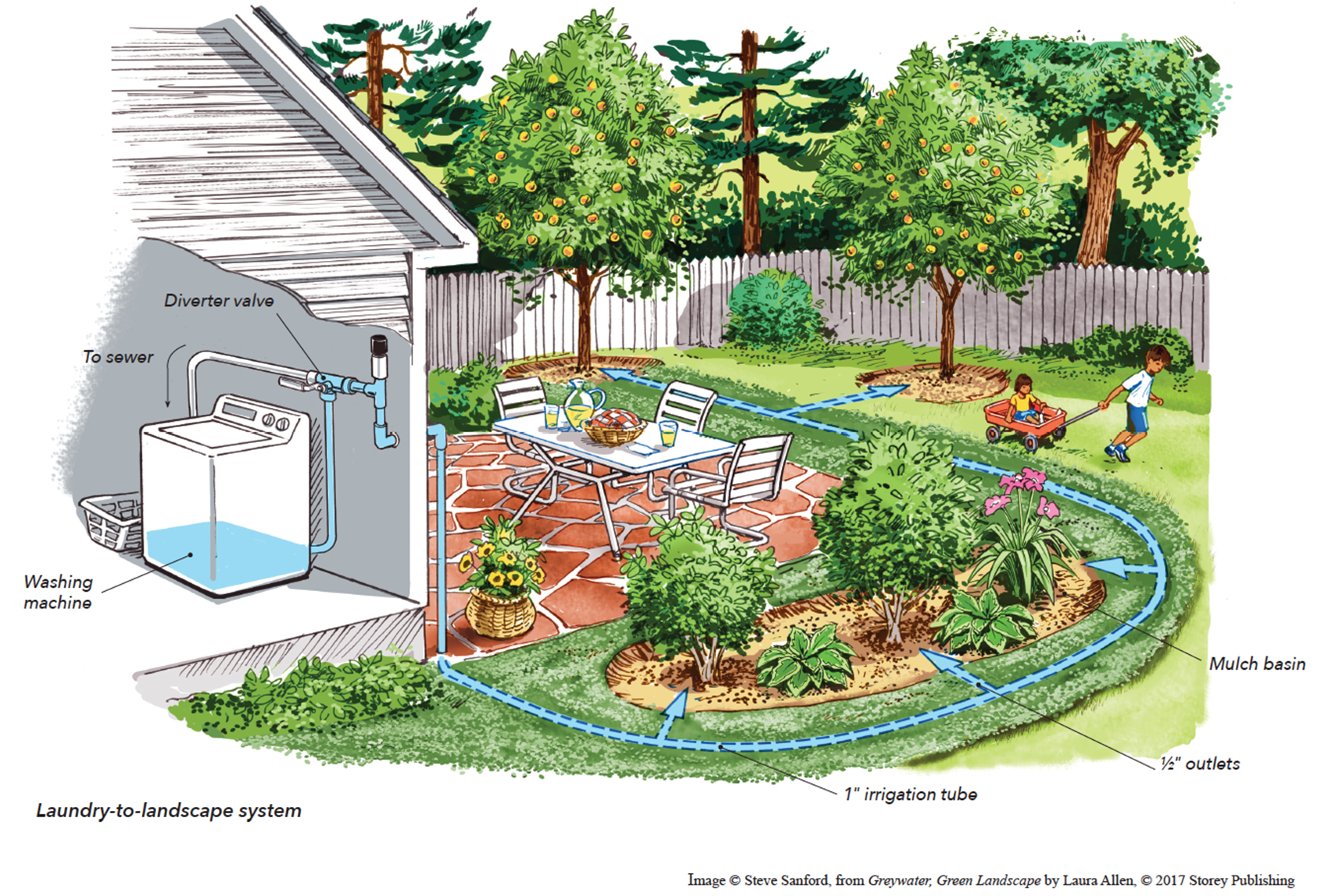
Laundry to Landscape is a type of graywater system that captures the used water from your washing machine and reroutes it to water plants in your garden. The Denver Department of Public Health and Environment is currently providing free training courses and installation kits for this system for Denver residents. More information can be found on the Denver Laundry to Landscape website at tinyurl.com/DenverL2L
Regulation 86 is the legislation in Colorado that governs graywater use. This regulation allows counties and municipalities to opt in or out of allowing graywater use. In addition to Denver County, graywater is currently allowed in the City and County of Broomfield, Town of Castle Rock, City of Golden, City of Grand Junction, Larimer County, and Pitkin County. The City of Fort Collins, La Plata County and other counties are working on local graywater ordinances. Unfortunately, several counties have chosen to opt out of allowing graywater. Check out the regulations in your local municipality to see what graywater regulations apply to your home.
GRASS LAWN REPLACEMENT
Replacing unused or underutilized grass lawns with native and drought tolerant plants is another effective way to conserve water. You can even use the space to install a rain garden or Laundry to Landscape system!
Discounts on lawn removal services are offered by many municipalities and water providers in the Denver Metro. More information and resources can be found on the Resource Central Lawn Replacement Program webpage.
Last updated 2026