
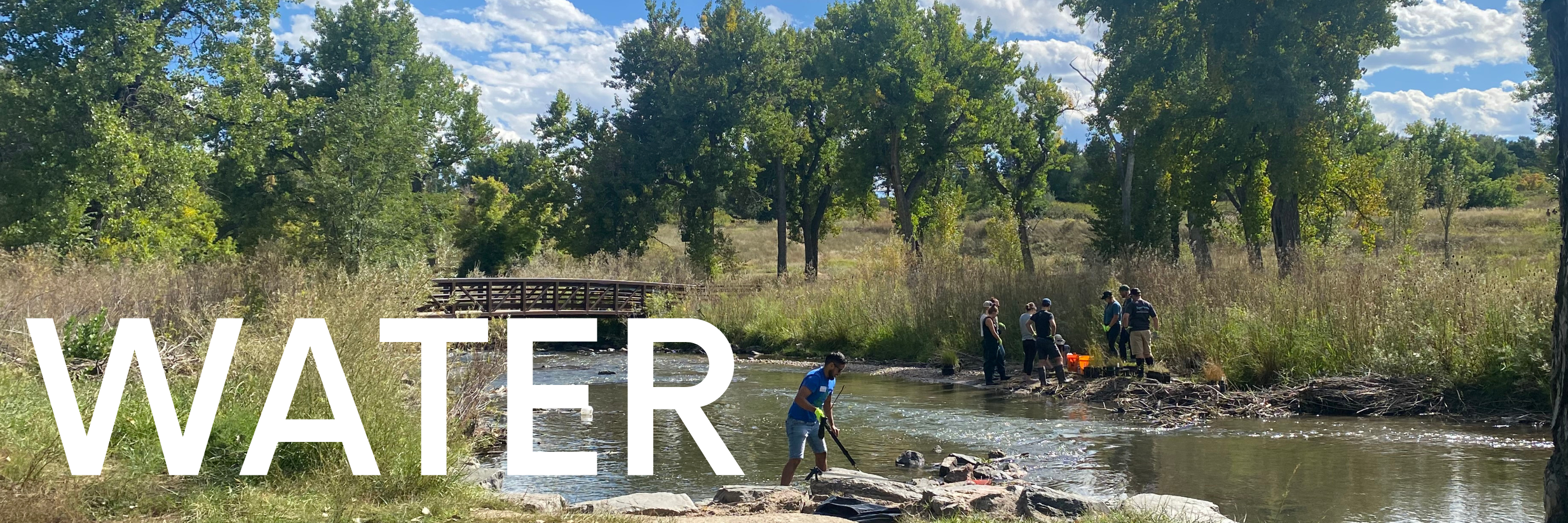
Water Quality & Conservation
Urban waterways can be great for recreation, respite from the heat, gathering in community, fishing, and much more. But in metro Denver neighborhoods most impacted by environmental injustices, many waterways have been rendered inaccessible to local residents. Railroad tracks, industrial zones, busy streets, contamination, stigma, safety, and other injustices often keep local residents from enjoying the many ways that water could enrich their lives. Groundwork Denver builds partnerships that collaboratively address watershed issues, from developing and implementing a watershed plan for Bear Creek, to youth-led projects, to volunteer activities that engage residents in improving riparian corridors, to fun opportunities for people of all backgrounds to enjoy playing along waterways like the South Platte River.
Groundwork Denver and Bear Creek
Groundwork Denver’s water programming began simply: youth teams removed invasive species and picked up trash along the South Platte River and Bear Creek. Today, local youth still protect these waters, but now they are contributing as part of a comprehensive, multi-partner collaborative effort that is actively improving the recreational use of these waterways.
In 2014, with support from Colorado Department of Public Health and Environment, Groundwork Denver completed a Watershed Plan for Bear Creek as part of the Clean Water Act's requirements. The creek channels high levels of E.coli. This bacterium indicates there is fecal contamination in the water and may make it unsafe to swim or play in. The Watershed Plan identifies best practices for the protection of water quality in Bear Creek.
Among the work Groundwork Denver conducts relating to Bear Creek is investigating potential water quality impacts from septic systems. The City of Sheridan and Tri-County Health provide outreach materials and financial assistance options for residents interested in connecting to the sanitary main.
Groundwork Denver also chairs the Water Quality Assessment Workgroup. This dedicated group of scientists created the South Platte Water Quality Assessment Tool in 2016. The tool includes interactive maps and graphs which help students, the public and researchers understand pollution trends throughout the South Platte River basin.
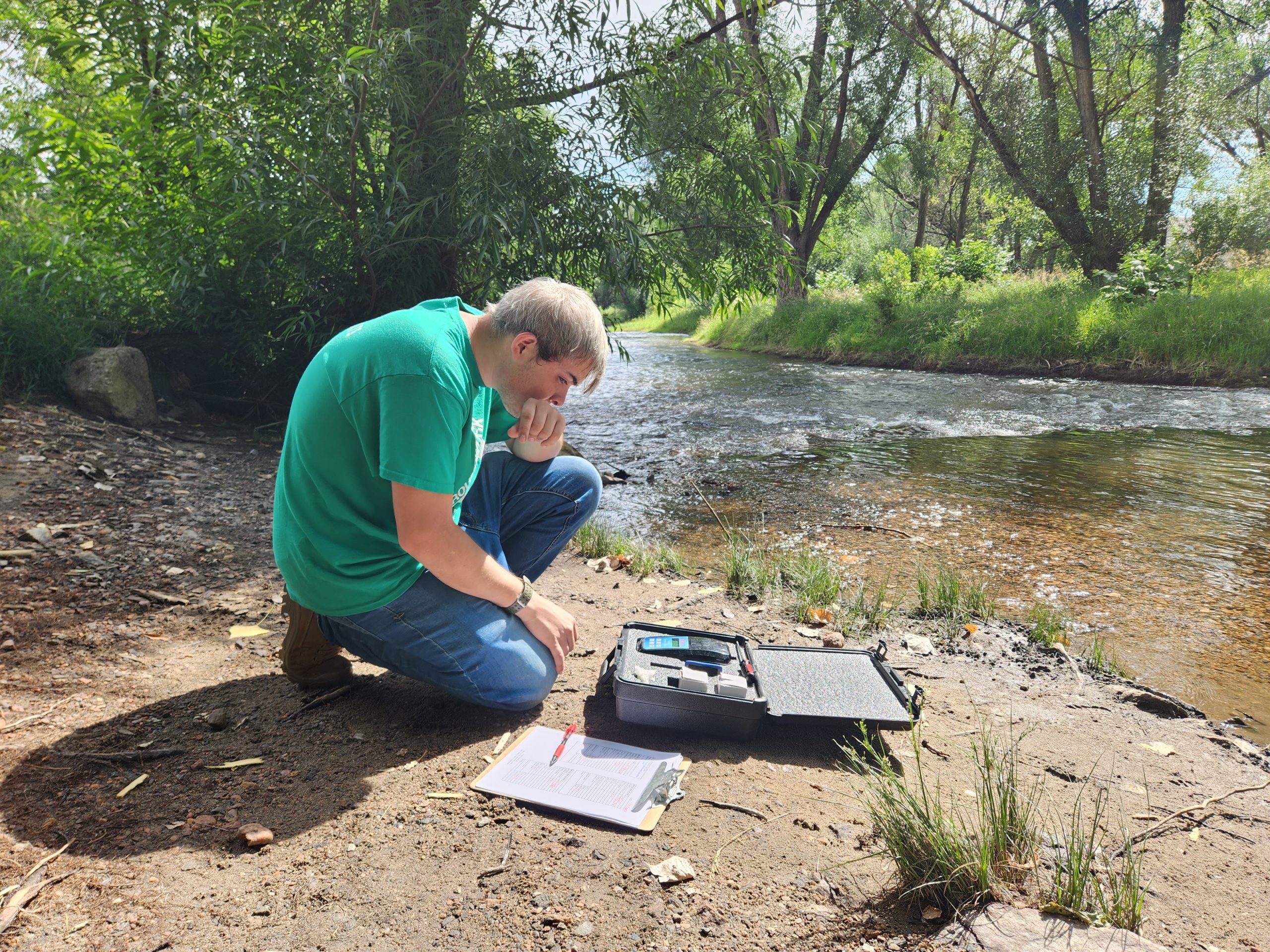
Water Quality Sampling
Groundwork Denver partners with the following to collect and analyze water samples for E. coli and other pollutants.
- Denver Environmental Health
- Lakewood
- Sheridan
- Environmental Protection Agency
- Metropolitan State University’s Biology Department
- Water Quality Control Division
- River Watch
- Denver Water

Water Conservation
In addition to monitoring water quality, Groundwork Denver takes measures to help residents conserve water and improve the ecosystem.
Rain barrels, rain gardens, invasive plant removals and litter clean-ups are big parts of this. By taking these actions alongside residents, youth, and volunteers, we reduce stormwater runoff that sweeps pollutants into creeks and rivers. We restore local habitats and conserve water for later use. And we create opportunities for people to feel at home on this land by tending to it and appreciating the ways it tends to us.
You can learn more about our rain barrels and rain gardens below.
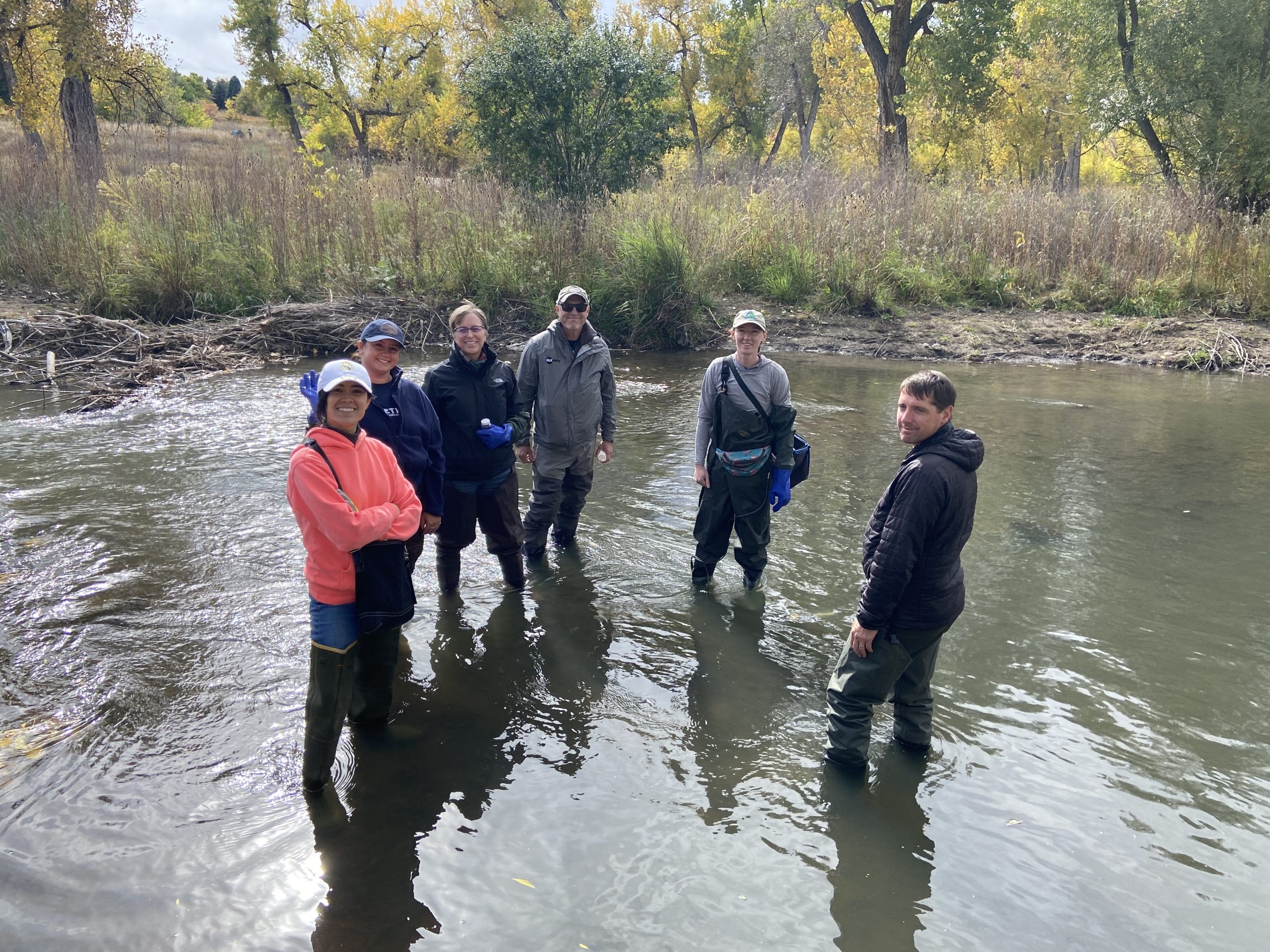
Water Volunteers
Do you want to get in the water and learn a little science? Join us each month for River Watch sampling on Bear Creek! Contact Water@GroundworkColorado.Org.
For group opportunities, visit our Volunteer Program page.
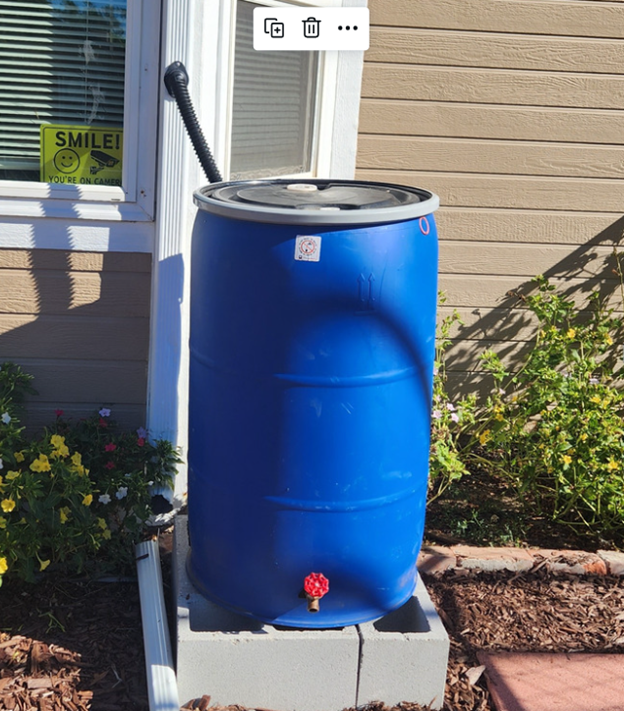
GROUNDWORK DENVER RAIN BARRELS
As part of our water conservation efforts, Groundwork Denver offers rain barrels at no cost to residents in areas most impacted by poor water quality. We'll even install your barrel for you!
Benefits of Rain Barrels:
- Conserve drinking water
- Reduce pollution from stormwater runoff
- Prevent flooding and soil erosion
- Ability to more easily grow and maintain garden beds
- Save money on outdoor water use costs
How Rain Barrels Work:
- Rainwater runs off your roof and flows from your downspout into the barrel.
- The rain barrel gradually fills up and can store up to 55 gallons of water. You can collect up to 110 gallons (2 Groundwork Denver barrels) at a time.
- Utilize the water as needed through a spigot at the barrel's base. Gravity does the work for you! You have the option of attaching a hose.
- Enjoy a lush lawn and garden, save tap water, and help improve the health of nearby creeks and rivers.
Grant funds at Groundwork Denver cover everything needed to harvest rain water for FREE! This includes the barrel, barrel stand, patented kit that preserves your downspout, installation, and support with long-term maintenance.
Currently, barrels are available to tree program participants who have been notified by email about their eligibility.

GROUNDWORK DENVER RAIN GARDENS
Rain gardens are quickly becoming a popular way to have low-maintanence gardens that also support native ecosystems.
Benefits of Rain Gardens:
- Beautiful, low-maintenance gardens
- Support the native ecosystem
- Conserve drinking water
- Reduce pollution from stormwater runoff
- Prevent flooding and soil erosion
- Save money on outdoor water use costs
How Rain Barrels Work:
- Rain gardens are planted where stormwater runs off a property (usually at the base of a home's downspout). To the untrained eye, rain gardens may not look too different from other gardens.
- While they are certainly beautiful, they are also functional. A saucer-shaped basic is dug out for the garden, and specific native perennials such as columbine, penstemon, echinacea, yarrow, and grasses (along with many other options), are strategically planted at various depths.
- When rain flows into the basin, instead of running off the land and carrying polluntion into local waterways, it instead soaks deeply into the garden.
- Rather than flooding the area and carrying pollutants with it, the water nourishes the plants. The plants root systems absorb the water, filter the excess, and return it to groundwater sources.
Groundwork Denver designs and plants rain gardens at no cost to eligible residents in areas impacted by environmental injustices.
We are not currently accepting new requests for gardens.
To learn how you can create your own rain garden, check out this great resource created by our partners at Colorado Stormwater Center and CSU Extension.

